Chemotherapy Preparation and Delivery
The path of a cytotoxic drug from preparation to waste, with staff protection. The product used in each of the six steps appears in the diagram of that step.
This page is intended for healthcare professionals.
The path of a cytotoxic drug from preparation to waste, with staff protection. The product used in each of the six steps appears in the diagram of that step.
This page is intended for healthcare professionals.
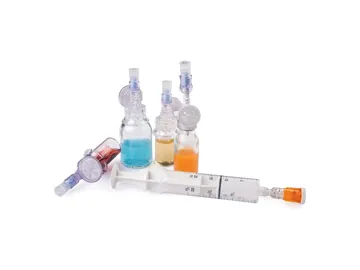
A mechanically closed transfer system of vial adapter, syringe adapter, needle-free connector and sets that keeps hazardous drug vapour inside from the vial to the patient.
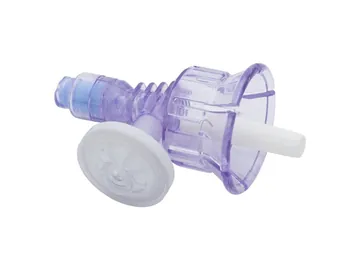
A vial adapter with a 0.2 µm hydrophobic air filter that balances vial pressure and closes the vial for hazardous drug preparation.
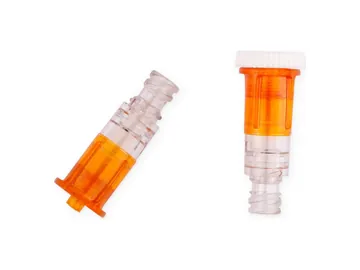
A needle-free closed male luer syringe adapter that locks to vial adapters, bag adapters and needle-free connectors for hazardous drug transfer.
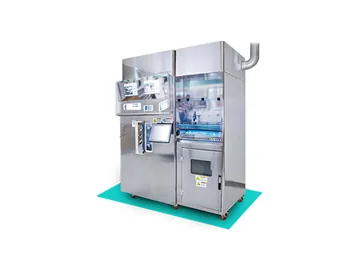
A fully automatic robot that prepares chemotherapy doses in bags and syringes inside a two-layer ISO 5 cell, with visual and gravimetric checks at each step.
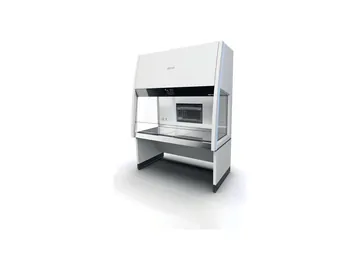
A biological or cytostatic safety cabinet with H14 filters, built to DIN EN 12469:2026 or DIN 12980:2017-05, in metric widths of 1200 to 2100 mm and convertible from a 2-filter to a 3-filter system on site.
All single-use, fixed-rate elastomeric pumps. The light-protected types shield the reservoir and line.
For patients and families: home chemo pump guide
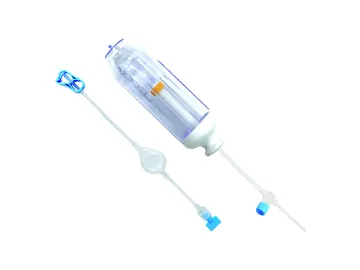
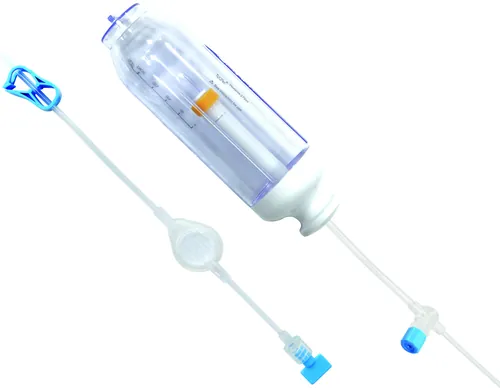
A single-use elastomeric infusion pump (disposable chemotherapy pump) with a hard shell, a rigid outer bottle: 60, 100 and 275 ml, fixed rates of 1 to 5 ml/h, no battery and no programming.
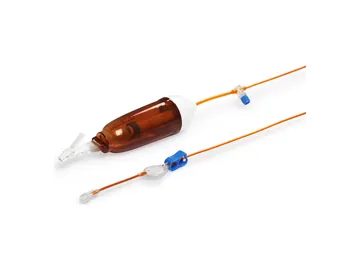
A single-use elastomeric infusion pump with a rigid body whose reservoir, line and accessories are all protected from light: 100 and 275 ml, fixed rates of 1.5 to 5 ml/h.
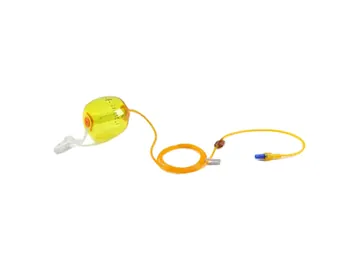
A single-use elastomeric infusion pump with a soft outer body, whose reservoir, line and accessories are protected from light: 100 and 275 ml, fixed rates of 1.5 to 5 ml/h.
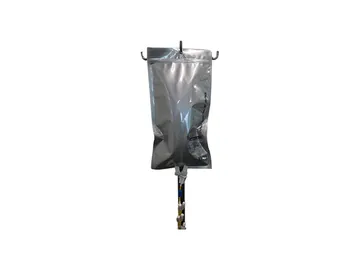
Light-protective covers for infusion bags and lines used to administer light-sensitive chemotherapy agents.
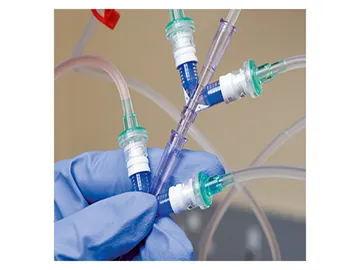
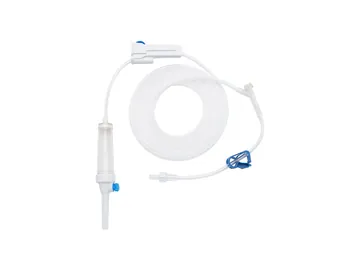
A multi-line, DEHP-free infusion administration set for chemotherapy regimens that involve several drugs through one access.
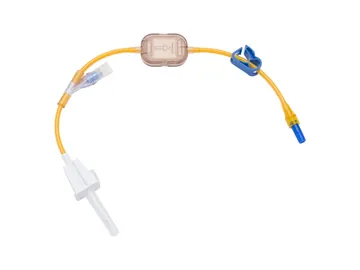
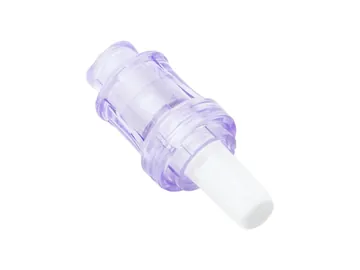
A short line with a needle-free connector that links the prepared drug bag to the administration set and keeps the closed system continuous.
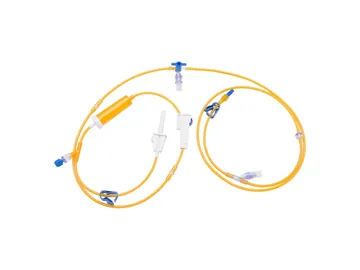
One, two and multi-way chemotherapy administration sets with needle-free connectors and check valves, so several drugs run through one closed set.
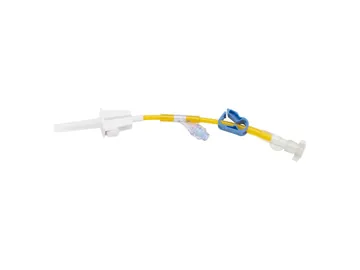
An infusion set with a 0.2 µm in-line filter, a vented cap and DEHP-free tubing for paclitaxel and other drugs that need filtration.
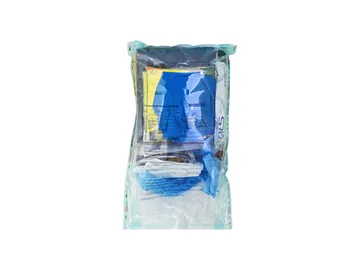
An emergency spill kit holding the protective equipment, absorbent materials and disposal bags a cytotoxic drug spill is cleared with.
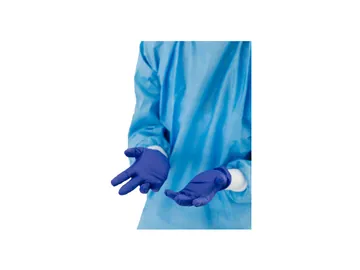
Personal protective equipment for staff handling cytotoxic drugs: a gown and a cover for the compounding session, ordered with the gloves the unit already stocks.
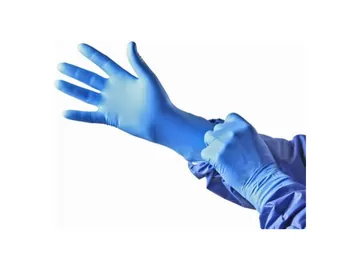
Single-use gloves for handling and administering cytotoxic chemotherapy drugs.
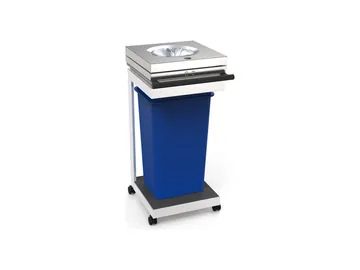
Seals cytotoxic and infectious waste in a continuous foil tube, contactless and aerosol-tight, for chemotherapy compounding units, hospital pharmacies and laboratories.
The hospital path of an antineoplastic drug in six steps: pharmacy compounding, transport, port access, administration at the chair, infusion continuing at home, spills and waste.
Compounding is done in a cabinet or isolator in a negative-pressure room; USP <800> advises a CSTD (dosage form permitting), not replacing the cabinet.
The outside of incoming vials may carry drug residue, so shipments are unpacked with chemotherapy gloves. Compounding takes place in an externally vented, negative-pressure room, inside a biological safety cabinet or a closed isolator. The compounder wears two pairs of chemotherapy gloves tested to ASTM D6978, a gown shown to resist drug permeation, a hair cover and shoe covers. USP <800> says a closed-system transfer device (CSTD) should be used for compounding when the dosage form allows; a CSTD does not replace the cabinet. Pharmacies with high volumes may compound doses with a robotic system in a closed cabinet. The administration set is primed with drug-free fluid in the cabinet before the drug is added.
Source: USP <800> (official 1 Dec 2019, FAQ January 2026); Power LA, Coyne JW. ASHP, Am J Health Syst Pharm 2018;75:1996-2031 (PMID 30327293)
USP 800 Power 2018
AChemotherapy PPE and chemotherapy gloves
BClosed-system transfer device (CSTD)
CRobotic compounding
The prepared dose goes in a sealed bag and a lidded container; USP <800> does not allow liquid or antineoplastic hazardous drugs in pneumatic tubes.
The outside of the prepared dose is wiped, labelled and placed in a sealed plastic bag; it goes to the ward in a shatter-proof, lidded, cleanable container. USP <800> does not allow liquid or antineoplastic hazardous drugs to be sent by pneumatic tube. A spill kit is at hand during transport. For a light-sensitive drug the bag is covered with an opaque sleeve right after compounding, and the sleeve stays on until administration ends; the product information says which drugs need it. For example, dacarbazine in PVC bags was found stable for 2 hours in daylight and for 72 hours when wrapped in foil.
Source: El Aatmani M et al. Am J Health Syst Pharm 2002;59:1351-1356 (PMID 12132562)
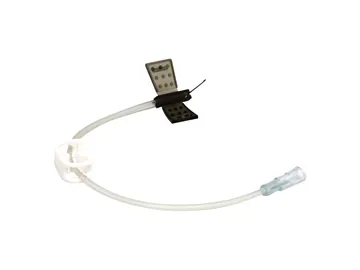
A non-coring Huber needle enters the septum perpendicularly; its length is chosen for port depth; before chemotherapy blood return is confirmed and the line flushed.
After skin antisepsis the port is accessed with a non-coring Huber needle, perpendicular to the septum. Needle length is chosen for the depth of the port and the tissue: a needle that is too short may not fully cross the septum, and the drug may leak into the surrounding tissue. The wings lie flat on the skin and are secured with the dressing. Before chemotherapy, blood return is confirmed and the line is flushed with saline; without blood return, catheter patency is assessed before administration, which matters all the more for vesicants.
Source: Sousa B et al. ESMO, Ann Oncol 2015;26 Suppl 5:v152-v168 (PMID 26314776)
Two pairs of chemotherapy gloves are worn; USP <800> requires a CSTD if the dosage form allows; the set is discarded intact as hazardous waste.
The nurse wears two pairs of chemotherapy gloves and a gown. USP <800> says a CSTD must be used when administering antineoplastic drugs if the dosage form allows. The drug bag is connected by a closed connection to a multi-line set primed with drug-free fluid; sequential drugs go through the same access and no drug-filled line is primed at the bedside. The bag and line of a light-sensitive drug stay covered. When the infusion ends, the line is flushed with drug-free fluid; the set is not removed from the bag and is discarded intact as hazardous waste. Studies show less surface contamination with CSTDs; evidence on staff health outcomes is limited and of low certainty.
Source: Gurusamy KS et al. Cochrane 2018, CD012860 (PMID 29582940); Bartel SB et al. Am J Health Syst Pharm 2018;75:199-211 (PMID 29339374)
BCSTD at the chair
Also at this step
In FOLFOX and FOLFIRI, 5-FU runs about 46 hours through an elastomeric pump at home; written leak instructions and a spill kit are provided.
In some regimens the infusion continues at home; in FOLFOX and FOLFIRI, for example, 5-FU runs for about 46 hours through an elastomeric pump. The pharmacy chooses and fills the pump for the prescribed volume and flow rate; the elastomeric reservoir pushes the drug through a flow restrictor at a set rate, with no battery and no programming. The flow rate is affected by temperature, the viscosity of the drug and the height of the pump relative to the patient. The patient and family get written instructions on what to do in case of a leak, and a spill kit is kept at home. The finished pump and needle are removed at the hospital or by the home care team and collected as hazardous waste.
Source: ONS position statement, administration of antineoplastic therapies in the home (2020, reaffirmed 2024)
ONS 2024
AStandard hard elastomeric pump
BLight-protected elastomeric pumps, hard and soft
The area is marked off, liquid absorbed from the outside in, the surface deactivated and cleaned; cytotoxic waste is incinerated at a licensed facility.
A spill kit is at hand wherever hazardous drugs are compounded, transported or administered. The area is marked off; the responder wears two pairs of chemotherapy gloves and a gown, with eye and respiratory protection when needed. Liquid is taken up with absorbent pads from the outside in; the surface is then deactivated, decontaminated, cleaned with detergent and, where needed, disinfected. All materials go into the cytotoxic waste container and the spill is documented. In Türkiye, cytotoxic and cytostatic drug waste is hazardous waste (18 01 08*); it is collected in leak-proof, lidded containers and incinerated at a licensed facility.
Source: European Commission, guidance for the safe management of hazardous medicinal products at work, 2023 (doi 10.2767/052571); Turkish Waste Management Regulation, OG 29314, 2015, Annex 4
EC 2023 Waste Reg 2015
BSealSafe Pro waste sealing device
This section is intended for healthcare professionals (oncology pharmacists, nurses and physicians). The steps are summarised from USP <800>, ISOPP (2022), ASHP (2018) and ONS recommendations; the institution's written procedure, the drug's product information and each product's instructions for use apply.