Frequently asked questions
What is a mechanical lithotriptor (lithotripter), and how does it work?
A mechanical lithotriptor, also spelled lithotripter, is a biliary lithotripsy set that breaks the stone by drawing the basket against a metal spiral. The spiral gives constant counter-pressure during the break. Laser, pneumatic and ultrasonic lithotriptors are different devices and are not described on this page.
When is mechanical lithotripsy needed in ERCP?
According to the manufacturer mechanical lithotripsy is indicated for stones larger than about 1.5 cm, or in cases with several stones that will not pass the papilla. The purpose is breaking stones in the bile and pancreatic ducts, and the indication is biliary lithotripsy.
What are the limits of a mechanical lithotriptor?
Lithotripsy cannot be guaranteed: if the stone is too hard the basket can break under the force applied to it, and then the stone and the torn basket have to be removed surgically. Lithotripsy is stopped at once when it becomes clear that the stone will not break, and the handle is turned in 360 degree increments with a 5 to 10 second wait between them.
What is emergency lithotripsy?
Emergency lithotripsy means freeing a basket that is stuck on a stone by breaking the stone in place. According to the instructions for use of the extraction basket, this is possible when the stone cannot be removed because of its size and cannot be released from the basket. The emergency spiral of this set is Type III, 4.0 mm in diameter and 100 cm long (120604).
Where does mechanical lithotripsy come in for a difficult stone?
The ERCP case flow of this site is summarised from the ESGE guidelines. In it, ESGE recommends mechanical lithotripsy for a stone that sphincterotomy and large balloon dilation do not clear or that is not suited to them. For a difficult stone the ESGE 2019 guideline (Manes et al., Endoscopy 2019;51:472-491) recommends adding papillary large balloon dilation of 12 mm and over to a limited sphincterotomy. The decision in a given patient is the physician's.
What is the price of a mechanical lithotriptor set, and how do I get an export quote?
We do not publish a list price on this page. The price depends on the component (the Type I or Type III spiral, the emergency spiral, the handle) and the quantity. To get a quote, use the Request an export quote button in the Export and Bulk Orders block at the bottom of this page, and give the component code, the quantity and the destination country.
Who supplies mechanical lithotriptors in Türkiye, and can I ask for an export quote?
Melekırmak, an Istanbul-based medical device distributor, offers this mechanical lithotriptor set. The manufacturer is Medi-Globe / Endo-Flex. The page lists the Type I and Type III spirals, an emergency spiral and a lithotripsy handle as separate components. For availability, documentation and lead time in your country, use the Request an export quote button at the bottom of this page and name the component code, the quantity and the destination country.
What does a mechanical lithotriptor set consist of?
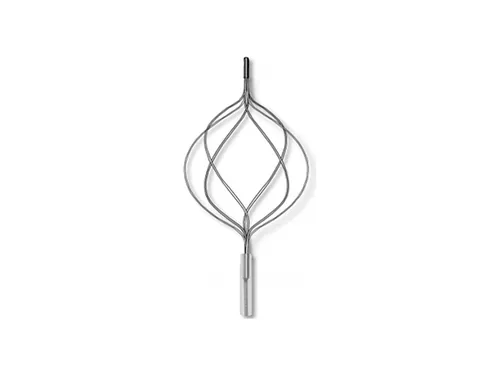
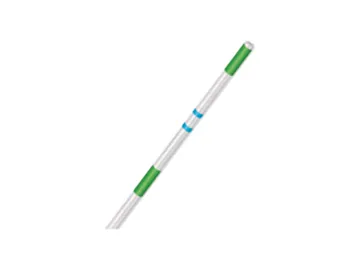
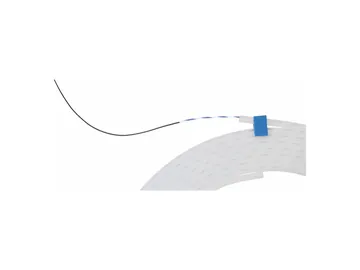
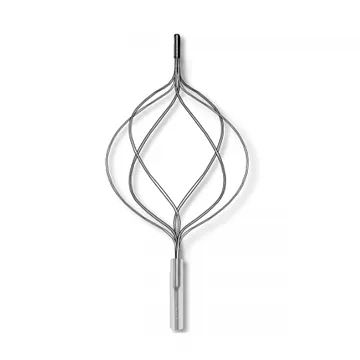
The set is a 4 m stainless steel traction wire with a proximal stainless steel push tube, a distal multifilament stainless steel basket, and a Teflon tube as the insertion aid for the working channel. To break the stone, the Teflon tube is exchanged for a metal spiral. The page lists the Type I spiral (120261), the Type III spiral (120602), the emergency spiral (120604) and the lithotripsy handle (120600).