For healthcare professionals

Virtual Bronchoscopic Navigation

Archimedes® System

Navigation to peripheral lung nodules from the patient's CT: a 3D airway and vessel map, live guidance on your bronchoscope.

2.01 mmMean navigation error, virtual to real target (user manual)
1-8Targets per patient (user manual)
C-armStandard C-arm, calibrated at installation; no cone-beam CT
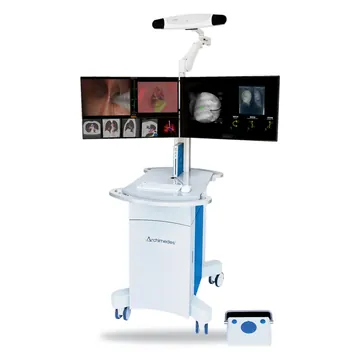
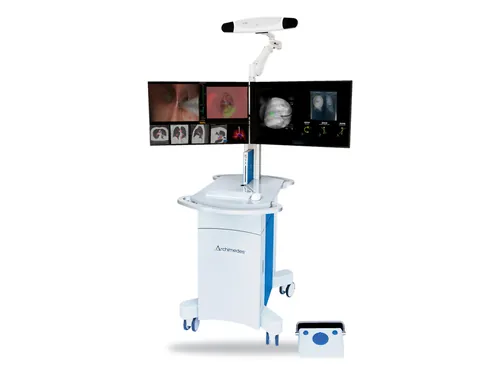
Archimedes System: mobile workstation with two monitors, tracking camera and Archimedes Board
Procedure

How is it performed?

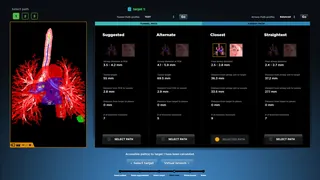
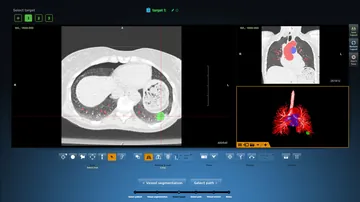
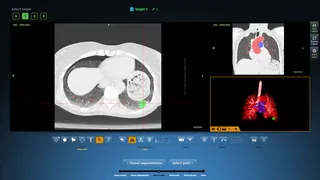
Planner: target marked on the axial CT, vessels and airways reconstructed in 3D
Step 01

Map the CT

The software segments the airways (3 mm and above) and main vessels from the DICOM series; you mark up to 8 targets per patient.

Virtual bronchoscopy: point of entry, planned tunnel and target; Virtual Doppler checks the vessels
Step 02

Choose the route and the point of entry

Up to four paths per target, two through the airways and two by tunnel; Virtual Doppler checks the vessels at the point of entry.

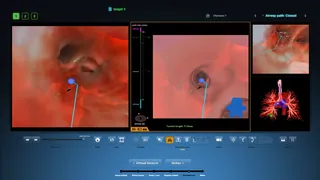
Live image and virtual view side by side; the path bar shows the distance left to the target
Step 03

Navigate with your own bronchoscope

Position comes from matching the live video to the virtual view, branch by branch; Virtual Target Correction adjusts for the difference between the CT and the patient on the table.

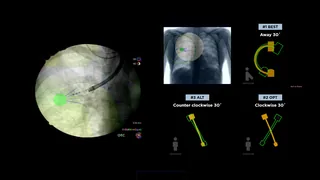
Fused fluoroscopy: the sheath has reached the CT target (green) on the live C-arm image; suggested C-arm angles on the right
Step 04

Tunnel and sample under fused fluoroscopy

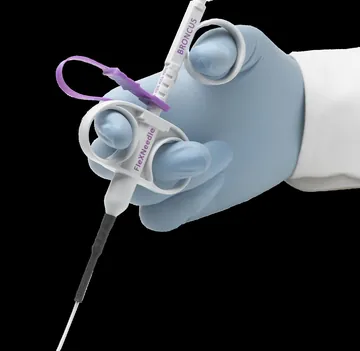
The FleXNeedle opens the point of entry, the balloon dilates the tract and the sheath follows the planned line to the target. Biopsy tools pass through its 2 mm channel.

Technique per the user manual

The balloon is inflated to 10 atm. The sheath is passed 5 to 10 mm through the wall, then advanced in steps of about 1 cm, its direction confirmed in at least two C-arm views before each step.

Patient selection

Which lesion, which technique?

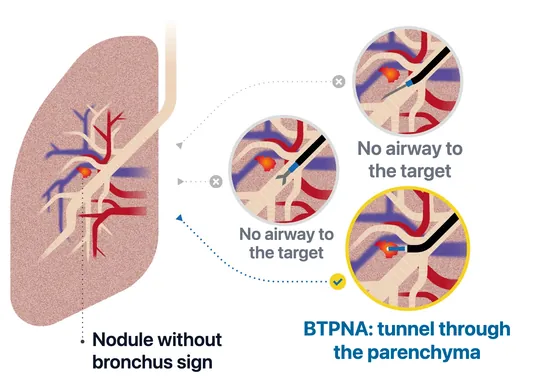
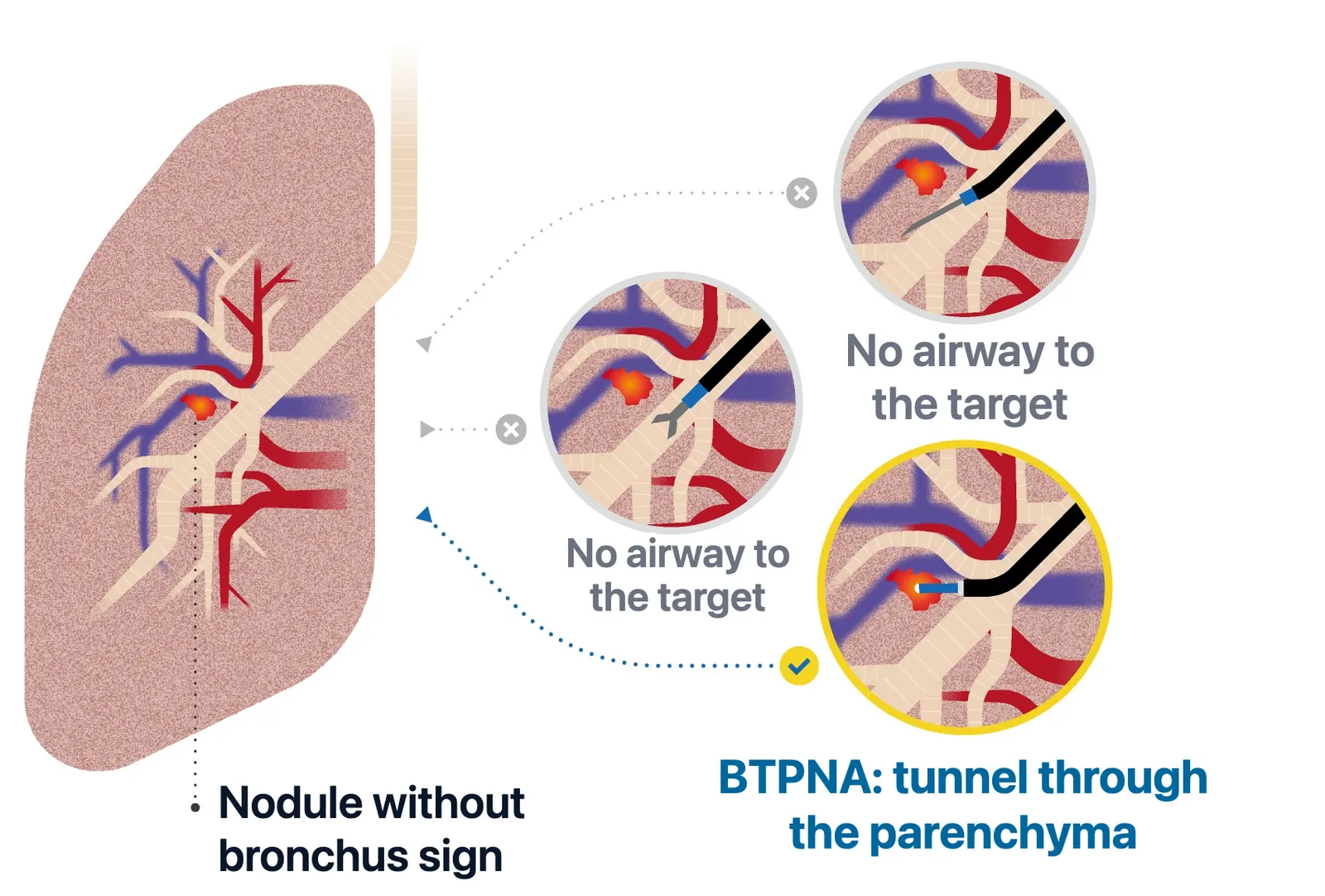
Without a bronchus sign, meaning no airway enters the lesion, BTPNA plans a short tunnel through the parenchyma, away from the mapped vessels. Where an airway reaches the lesion, guided TBNA or sampling through the sheath is used.

Suitable lesion and patient

  • Peripheral lung nodule or lesion that needs a tissue diagnosis
  • No bronchus sign: transparenchymal access (BTPNA)
  • An airway reaches the lesion: guided TBNA or sampling through the sheath
  • Anaesthesia: in EAST2 the procedures were performed under general anaesthesia [1]
  • Adult patient; the user manual states it is not for paediatric use
Patient selection and CT protocol
  1. Chest CT to protocol: slice thickness 1.25 mm or less, spacing 0.625 mm or less, 200 to 1,200 images, the whole lung
  2. For fused fluoroscopy the CT is taken with the patient on the Archimedes Board
  3. Planning on the Planner: targets, routes, point of entry
  4. In the suite: a standard C-arm calibrated at installation and a calibrated bronchoscope; a therapeutic scope for BTPNA
Schematic: a nodule without a bronchus sign, out of reach of needle and forceps through the airway, reached by BTPNA
Clinical evidence

What has been published on Archimedes and BTPNA?

StudyDesignPatientsMain resultSafety
EAST2 [1]Prospective, single-arm, 10 sites (USA, China, Germany)104 patients, 114 lesionsBiopsy yield 75.4% (86/114); diagnostic yield 72.8% to 75.4% at a mean 437 days of follow-upPneumothorax 1.9% (2), no chest tube needed; mild bleeding 1
NAVIGATOR [2]Single-centre prospective cohort (UMCG Groningen)35Diagnostic yield 77% (27/35); 37% in nodules of 20 mm or lessNo pneumothorax; bleeding 26% (grade 3: 6%)
BTPNA feasibility [3]Prospective, single-arm, before surgical resection12Tunnel created in 10 patients; adequate biopsies in 10 (83%)No adverse events during the procedures

EAST2 was sponsored by the manufacturer (Broncus Medical). Biopsy yield and diagnostic yield are different measures.

The difference

Access through the parenchyma to nodules without a bronchus sign

  • A route where there is no airway BTPNA plans access through the parenchyma by a tunnel. In EAST2 the bronchus sign was not an independent predictor of yield in multivariable analysis; in 21 lesions without a bronchus sign the biopsy yield was 57.1% and the sampling yield 95.2%. [1]
  • Vessels mapped before you move Main vessels are in the plan; Virtual Doppler checks the point of entry, the plan shows the distance to the pleura.
  • Your bronchoscope, your C-arm Any calibrated bronchoscope and a standard C-arm without cone-beam CT. Airway navigation needs no position sensor and no dedicated consumable; fused fluoroscopy uses an access key per case and BTPNA the access kit.
  • Several techniques on one platform Guided TBNA, sampling through the sheath or BTPNA on one plan; marker placement in lung tissue is within the intended use (user manual).
System

What is in the system?

Your bronchoscope, C-arm and biopsy tools stay the same.

Archimedes System

Archimedes System

Mobile cart with two monitors: captures the bronchoscope and fluoroscopy video, matches live image to virtual view, overlays target and path on the C-arm image.

Archimedes Planner

Archimedes Planner

Laptop planning software: extracts airways of 3 mm and above and the main vessels from the CT, marks targets, proposes routes.

BTPNA Access Kit

BTPNA Access Kit

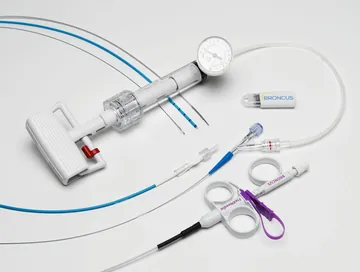
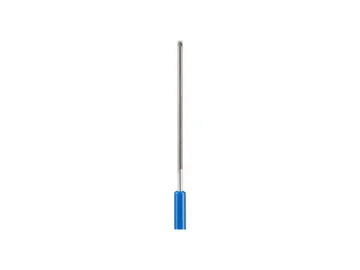
Single use: FleXNeedle, balloon dilator, sheath with blunt stylet (2 mm channel) and gauge syringe, the set that opens and holds the tunnel.

FleXNeedle®

FleXNeedle

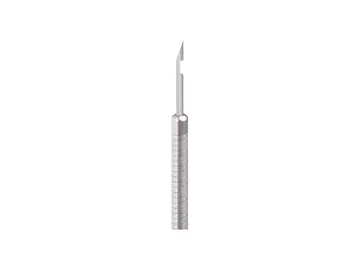
18G transbronchial needle, 0 to 20 mm adjustable depth, 1,400 mm long; creates the point of entry through the airway wall for BTPNA.

Measurements at a glance

Coring needle
18 G
Penetration depth
0 to 20 mm
Catheter outer diameter
1.9 mm
Working channel
≥ 2.0 mm
All technical data
What it is
CT-based virtual bronchoscopic navigation: Planner software, a workstation with fused fluoroscopy, the BTPNA access kit.
Who it is for
Peripheral lung nodules that need tissue, including lesions no airway leads to.
How it is used
Plan on the CT, navigate with your own bronchoscope and C-arm; tunnel (BTPNA) where the airway ends.
CT input
Slice thickness 1.25 mm or less, spacing 0.625 mm or less, 200 to 1,200 images
Fluoroscopy
Standard C-arm calibrated at installation; BNC or DVI-D video input
Navigation error
Distance between virtual and real target: 2.01 ± 0.94 mm in navigation, 1.5 ± 0.89 mm under fluoroscopic guidance (mean ± SD), user manual
Bronchoscope
Any bronchoscope added and calibrated; a therapeutic scope for BTPNA
Vessel map
Main vessels, adjustable minimum displayed vessel diameter; Virtual Doppler check at the point of entry; distance to the pleura
Consumables
None for airway navigation; fused fluoroscopy uses an access key per case; BTPNA uses the single-use access kit
Coring needle
FleXNeedle 10005-2: 18G, penetration depth 0 to 20 mm, catheter outer diameter 1.9 mm, catheter length 1400 mm, internal lumen 0.95 mm
Dilation balloon
Order number 10008: non-compliant balloon, 4 mm outer diameter by 6 mm long; inflated to 10 atm, rated burst pressure 16 atm; catheter 1437 mm with a 968 mm working length, through a working channel of 2.0 mm or more
Technical data

Who makes it
Broncus Medical.

Technical data: the manufacturer's user manual and instructions for use.

References

  1. Sun J, Criner GJ, Dibardino D, et al. Efficacy and safety of virtual bronchoscopic navigation with fused fluoroscopy and vessel mapping for access of pulmonary lesions. Respirology. 2022;27(5):357-365. doi:10.1111/resp.14224
  2. Hiddinga BI, Slebos DJ, Koster TD, et al. The additional diagnostic value of virtual bronchoscopy navigation in patients with pulmonary nodules: the NAVIGATOR study. Lung Cancer. 2023;177:37-43. doi:10.1016/j.lungcan.2023.01.012
  3. Herth FJF, Eberhardt R, Sterman D, et al. Bronchoscopic transparenchymal nodule access (BTPNA): first in human trial of a novel procedure for sampling solitary pulmonary nodules. Thorax. 2015;70(4):326-332. doi:10.1136/thoraxjnl-2014-206211

Archimedes in Türkiye

Melekırmak Medical is the Türkiye distributor of Broncus Medical. Write to our team for the literature, the technical data and your unit's requirements (CT protocol, C-arm, bronchoscope). The manufacturer provides clinical support to the teams using the system.

If you are a patient or a relative: only a specialist in the relevant branch can judge whether this procedure fits you. Please ask your own physician.

Updated: 19.10.2026

Request a navigation demo

Tell us about your peripheral nodule caseload, your bronchoscopes and your C-arm; we will share the literature and the requirements list.

Manufacturers: Partner with us

Call Request a demo