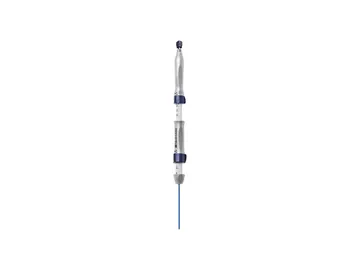
Coming Soon

Conventional TBNA Needle

A conventional TBNA needle (conventional transbronchial needle aspiration, cTBNA) is a single-use needle with a side hole, passed through the bronchoscope without ultrasound guidance. It takes tissue and secretion samples from large central lymph nodes and from lesions around the central airways. Bronchoscopy units can use it where no EBUS scope is available.

Manufacturer: Medi-Globe / Endo-Flex

This page is intended for healthcare professionals.
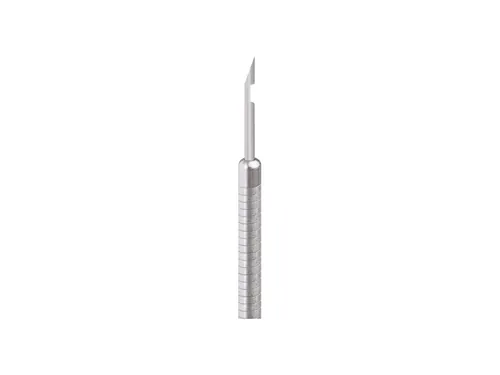
Conventional TBNA Needle

Measurements

Gauges and lengths
20G, 21G and 22G with a working length of 100 or 120 cm

A conventional TBNA needle (transbronchial needle aspiration) for sampling of central airway and mediastinal lesions during bronchoscopy.

In which cases?

  • Large subcarinal and central nodes, sampled on anatomical landmarks when no EBUS scope is free.
  • Peribronchial lesions seen on CT, where cytology answers the question.
  • Staging of known lung cancer before treatment planning, where the node is central and large.
  • Paratracheal and peribronchial targets located on the Wang mapping points during a routine bronchoscopy.

What makes it different?

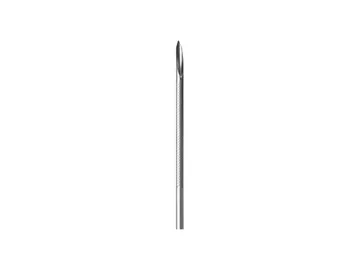
  • Side hole behind the tip, so the aspirate is drawn from the lateral opening as well.
  • 15° bevel for atraumatic entry through the airway wall.
  • Metal sheath versions transmit more puncture force, and there are Teflon sheath versions as well.
  • Safety clip and lock hold the needle inside the sheath until it is advanced.

Frequently asked questions

What is conventional TBNA, and what is a TBNA needle?

Conventional TBNA (cTBNA, transbronchial needle aspiration) uses a TBNA needle that passes through the bronchoscope and takes tissue and secretion samples through the airway wall, with no ultrasound guidance. EBUS-TBNA takes the same kind of sample under ultrasound.

Can you do TBNA without EBUS?

Yes. Conventional TBNA is done with a bronchoscope alone. Large subcarinal and central nodes are sampled on anatomical landmarks, and peribronchial lesions seen on CT can be sampled as well.

Which targets is it used for?

Large subcarinal and central nodes, peribronchial lesions seen on CT, and paratracheal and peribronchial targets located on the Wang mapping points. It is also used to stage known lung cancer when the node is central and large.

What gauges and lengths does it come in?

Per the manufacturer's instructions for use: 20G, 21G and 22G, with a working length of 100 or 120 cm. There are metal sheath and Teflon sheath versions. The catheter diameter is matched to the working channel diameter of the bronchoscope.

Can I order it in Türkiye?

Not yet. The conventional TBNA needle is not yet available for order in Türkiye, and the page lists it as Coming Soon. Write to us for the product documentation and the manufacturer's data.

What is the difference between conventional TBNA and EBUS-TBNA?

Conventional TBNA is done with the bronchoscope alone and no ultrasound guidance. Large subcarinal and central nodes are sampled on anatomical landmarks, and peribronchial lesions seen on CT can be sampled as well. EBUS-TBNA is done with an EBUS bronchoscope and samples mediastinal and hilar lymph nodes under real-time ultrasound. The conventional needle has a side hole and comes in 20G, 21G and 22G; the EBUS needles of this range are 22G. The method follows the target and the equipment in the unit, and the choice is the physician's decision. The conventional TBNA needle is coming soon and cannot yet be ordered in Türkiye.

Technical data

Manufacturer
Medi-Globe / Endo-Flex
Intended use
Taking tissue and secretion samples from the human lung for biopsy
Use with a bronchoscope
The needle is used only together with a bronchoscope, and the catheter diameter is matched to the working channel diameter
Single use
Single use; the needle is not used again

Updated: 09.11.2026

This product is not yet available for order in Türkiye. We can share the product documentation and the published studies.