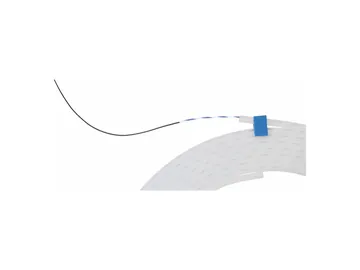
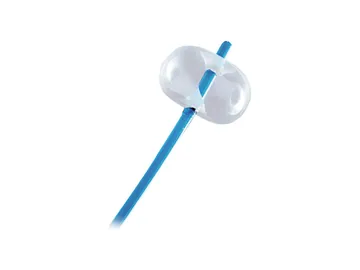
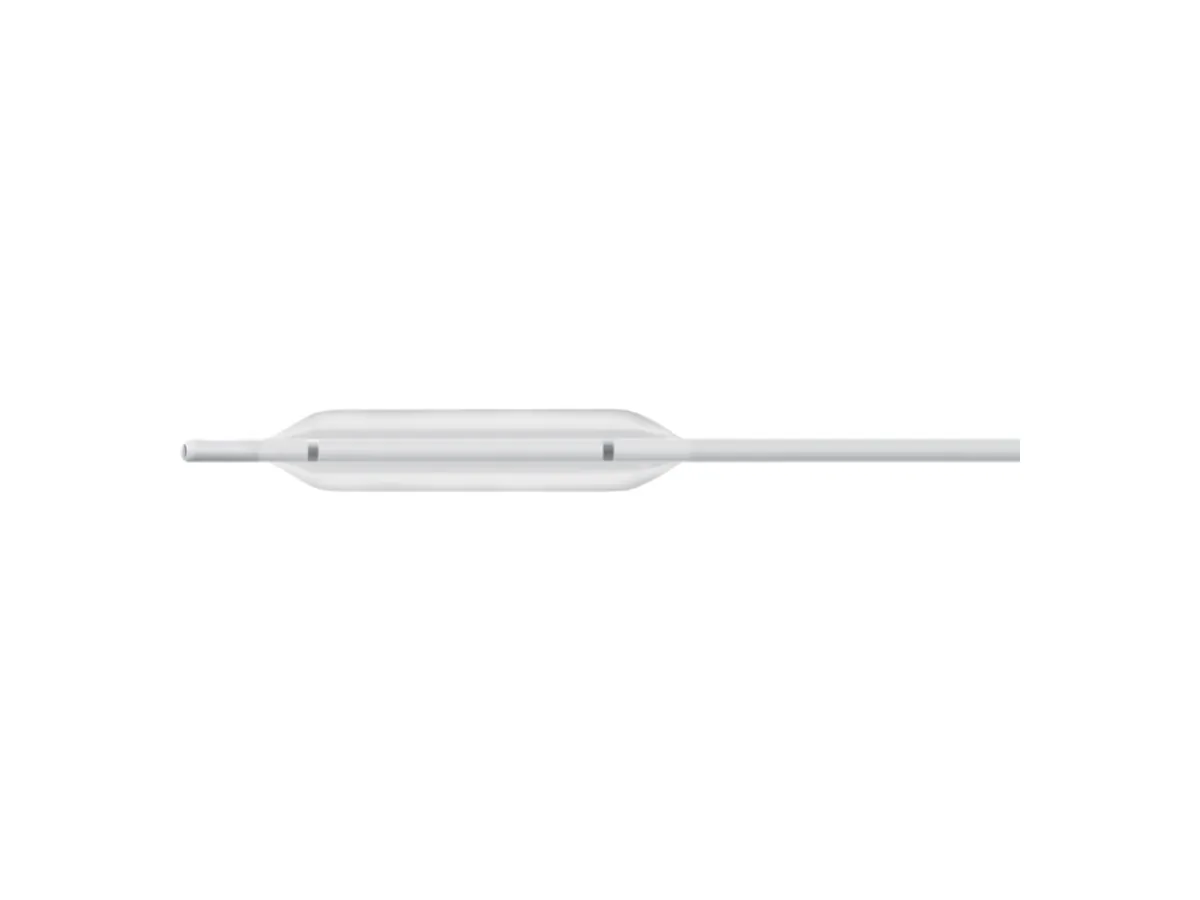
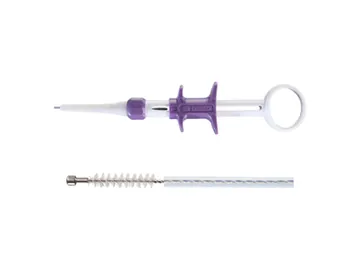
ExPander® Dilation Balloon

A single-use through-the-scope balloon dilator, inflated with fluid over a guidewire.

Manufacturer: Medi-Globe / Endo-FlexClass Is4 SUT codes16 models

This page is intended for healthcare professionals.

ExPander Dilation Balloon

Measurements at a glance

Balloon diameter
4 to 40 mm
by model
Balloon length
20/30/80 mm
by model
Smallest channel
2.8/4.7 mm
stated for 11 models
Catheter diameter
7 French
Dilation balloon / Dilatasyon balonu A B C D
A
Balloon diameter 4 to 40 mm
B
Balloon length 20 / 30 / 80 mm
C
Catheter length 200 cm on the biliary and the graded balloons, 300 cm on the enteroscope versions and 100 cm on the achalasia balloons
D
Smallest channel 2.8 / 4.7 mm

Schematic, not to scale

Models

16 models

Balloon diameter (mm)Balloon length (mm)Smallest channel (mm)SUT codeModel
Biliary single-size balloons
4202.8GS13403410420
6202.8GS13403410620
8302.8GS13403410830
10302.8GS13403411030
12302.8GS13403411230
Enteroscope version, 300 cm catheter
4202.8GS21203410420-300
6202.8GS21203410620-300
8302.8No code3410830-300
Graded balloons
6 / 7 / 820No code3410620PRO
6 / 7 / 820GS13403410630PRO
8 / 9 / 1030No code3410830PRO
10 / 11 / 1230No code3411030PRO
12 / 13.5 / 1530GS13403411230PRO
Achalasia balloons
30804.7GS13503413080
35804.7GS13503413580
40804.7GS13503414080
Catheter length
200 cm on the biliary and the graded balloons, 300 cm on the enteroscope versions and 100 cm on the achalasia balloons
Guidewire
0.035 inch
Pressure steps of the graded balloon
6, 7 and 8 mm at 3.0, 6.0 and 9.0 atm; 8, 9 and 10 mm at 3.0, 5.5 and 8.0 atm; 10, 11 and 12 mm at 3.0, 5.0 and 7.0 atm; 12, 13.5 and 15 mm at 3.0, 4.5 and 7.5 atm
Inflation device
An inflation and deflation device with a 0 to 440 PSI manometer is the recommended equipment

The three-value cells are the graded balloons: one balloon goes up in three steps on the same catheter.

Blank cells: measurements awaited from the manufacturer.

A single-use through-the-scope (TTS) balloon dilator, run over a guidewire, for the dilation of GI and biliary strictures.

In which cases?

  • Benign biliary stricture, including an anastomotic stricture after hepatobiliary surgery.
  • Achalasia, with the large-diameter balloon at the lower oesophageal sphincter.
  • An anastomotic stricture after GI surgery, opened in steps across more than one session.

What makes it different?

  • Diameter and radial force hold along the whole balloon length, so the stricture opens along the segment.
  • Radiopaque metal markers at both ends of the balloon, so the position is checked under fluoroscopy before it is inflated.
  • A graded balloon goes up in three steps on the same catheter, so a stricture is opened in stages without an exchange.
  • Runs over a guidewire up to 0.035 inch, so the wire stays across the stricture while the balloon is exchanged.

Frequently asked questions

Which balloon for which job?

There are four families: biliary single-size balloons at 4 to 12 mm on a 20 or 30 mm balloon length; the same balloons on a 300 cm catheter for enteroscopes; graded balloons, one balloon with three diameters at three pressures; and achalasia balloons at 30, 35 and 40 mm on an 80 mm balloon length.

Which working channel does the balloon need?

It changes from model to model: 2.8 mm on the biliary balloons up to 12 mm and on the enteroscope versions, and 4.7 mm on the achalasia balloons. The catheter itself is 7 French and takes a guidewire up to 0.035 inch.
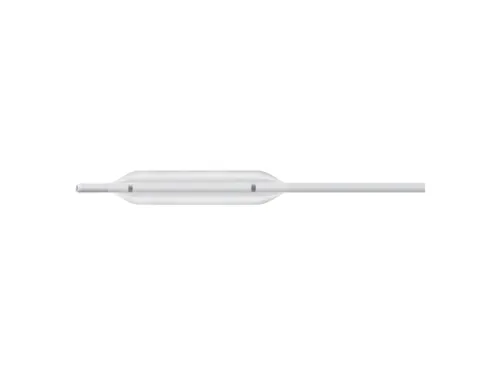
Technical data

Manufacturer
Medi-Globe / Endo-Flex
Class
Is
SUT codes
GS1340GS2120GS1350GS1330
Sterilization and shelf life
Sterile from the factory, single use; 36 months on most models
Latex
Does not contain latex
Markers
Radiopaque markers

Distributing ExPander Dilation Balloon in Türkiye

Registration, the first cases and nationwide supply are handled by one team.