Frequently asked questions
What is a wireless handheld ultrasound, and how does it differ from a console-based ultrasound system?
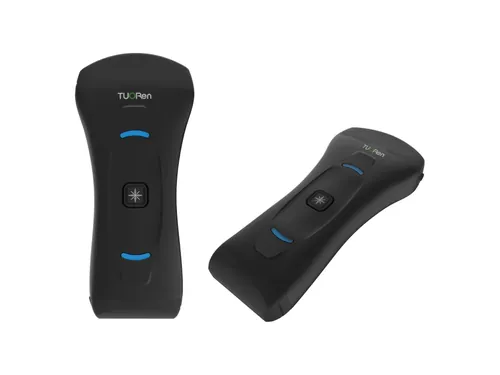
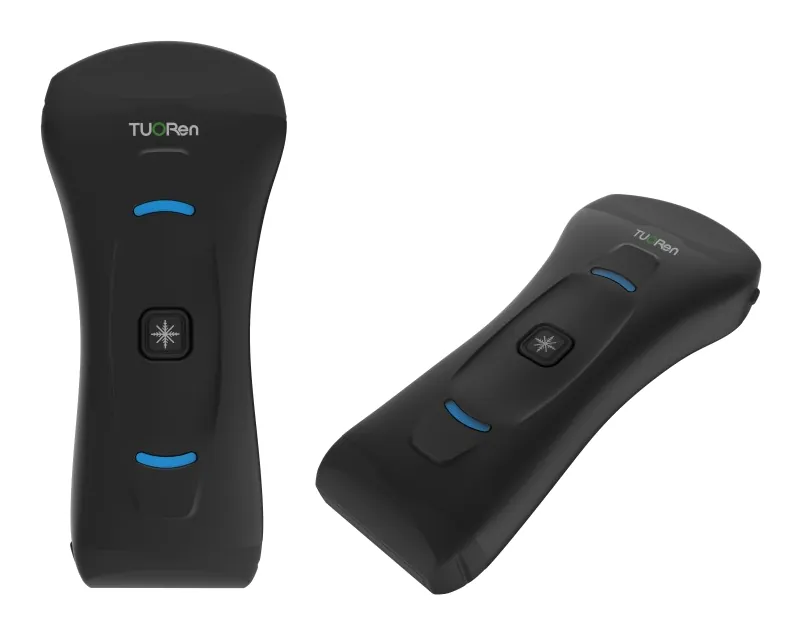
A wireless handheld ultrasound is a probe that does the work of the main unit and sends the image to a smart display such as a tablet. It is also called a handheld ultrasound, a pocket ultrasound or a POCUS device. A console-based system has its own large screen. The handheld probe is meant for point-of-care assessment and procedure guidance, and this page does not present it as a replacement for a console-based system. Butterfly iQ is the brand name Butterfly Network uses, and Clarius is the brand name Clarius Mobile Health uses, for their handheld ultrasound products. The names belong to their owners, and the product on this page is not one of those brands. This page does not compare products.
Which probes are in the series?
The wireless TR-WP1 carries a linear (5 to 12 MHz) and a convex (2.5 to 6 MHz) array in one probe. The wired series has five linear probes (TRU13, TR-P1, TR-P1PRO, TR-P1SMA and TR-P1SUP, at 5 to 12 or 5 to 14 MHz) and three convex probes (TRU17, TR-P2ULT and TR-P2EXP, at 2.5 to 6 MHz). The series also has a phased array probe, the TR-P3AI, at 2 to 4 MHz. The codes are in the model table.
When is the linear array used, and when the convex array?
As a general rule the linear array works at a higher frequency and shows structures close to the skin, such as vessels and superficial nerves, in more detail. The convex array works at a lower frequency and reaches deeper structures. On the TR-WP1 both arrays are on the same probe. The physician chooses the array for each procedure.
What does the probe connect to, and which tablets work with it?
The probe is the main unit, and the image is viewed on the screen of a smart display. The TR-WP1 connects to that screen wirelessly, and the wired series connects with a USB cable. A tablet is an optional accessory. This page does not list the compatible devices, the app or the operating system. Write to us for that information.
How is the TR-WP1 charged, and how long does the battery last?
A wireless charger is on the accessory list of the wireless series. This page does not list the battery life or the charging time. Write to us for that information.
What does IPX7 mean, and how is the probe cleaned?
IPX7 is a water protection level in the IEC 60529 standard and describes protection against temporary immersion in water. The manufacturer gives this level, together with daily cleaning and disinfection, in the general description of the series. This page does not confirm that the level also applies to the wireless TR-WP1. Write to us for that information. The manufacturer's own instructions set which disinfectant and which method are used.
Has the TR-WP1 been studied in a clinical trial?
Yes, we know of one randomized controlled trial (Zhuang and colleagues, Frontiers in Medicine, 2026). At a single centre it studied radial artery catheterization in 194 patients aged 65 or over. In one group the TR-WP1 linear probe was used with a system that brought the image into the operator's view through another maker's AR console and smart glasses. The other group used a console-based ultrasound system. First puncture success was 90.7 against 68.0 percent, and the median total procedure time was 36 against 46 seconds. Because the two groups used different ultrasound systems, the trial does not separate the share of the glasses or of the probe. Three experienced anesthesiologists did the procedures and knew the group. The authors declared no financial support and no commercial relationship.
Who uses a handheld ultrasound?
The manufacturer lists the emergency department, intensive care and the ambulance, ward rounds and the initial physical examination, and also puncture guidance, pain treatment and PICC catheterization during procedures. Ultrasound-guided procedures need training and experience, and the hospital decides who uses the device and for which procedure.
Can I order a wireless handheld ultrasound in Türkiye, and what is the price?
Not yet. This page carries no list price either. We can share the product documentation. Write to us with the button on this page. The wireless handheld ultrasound is not yet available for order in Türkiye.