Frequently asked questions
What is a video laryngoscope, and what is it used for?
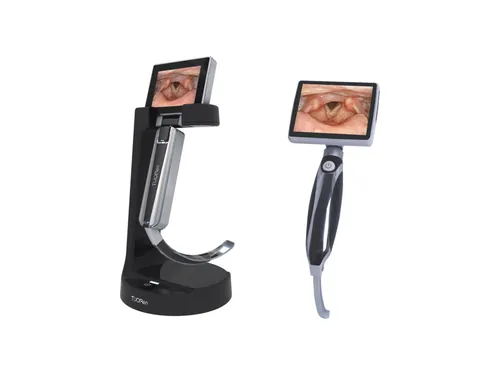
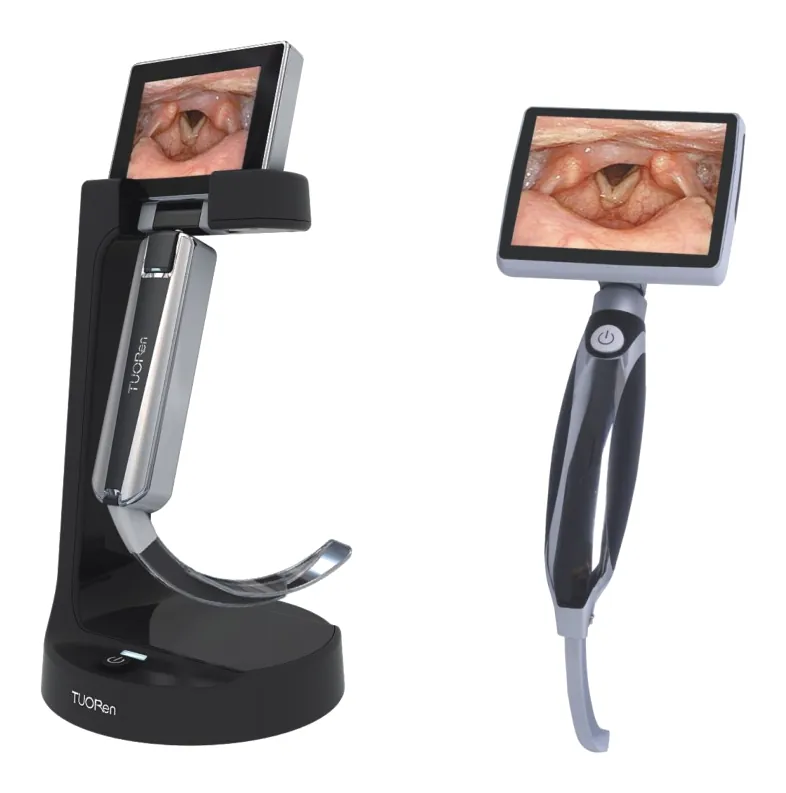
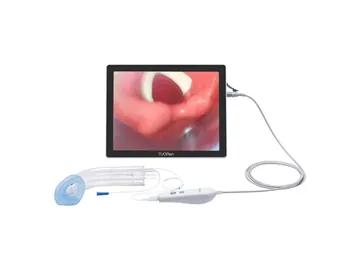
A video laryngoscope is an intubation device that shows a camera image of the glottis on a monitor above the handle. It is used when a difficult laryngoscopy is expected, and as a rescue when direct laryngoscopy has failed, in the operating room, the emergency department and intensive care. A separate neonatal model covers newborns and premature babies.
What is the difference between a video laryngoscope, a direct laryngoscope and a video stylet?
The difference is how the glottis is seen. With a direct (classic) laryngoscope it is seen by direct sight along the blade. With a video laryngoscope it is seen on the monitor, as a camera image. A video stylet has no blade: it carries the image through a rigid, shapeable body. Each of the three has its own page on this site.
Which blade sizes are available, and how is the size chosen?
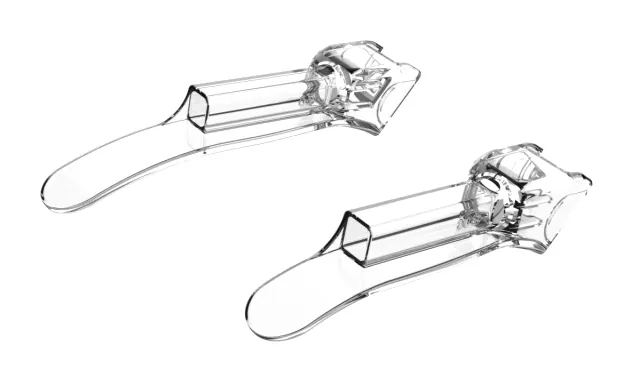
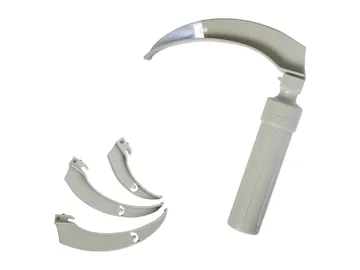
Five single-use blades are available: size 1 for infants, 2 for children, 3 for adults, 4 for obese patients and 5 for the difficult airway. The neonatal model has its own three blades: MIL00 for premature babies, MIL0 for newborns and MIL1 for infants. The physician chooses the blade for the patient, and the table lists the blades of the two models separately.
Is there a video laryngoscope for newborns and premature babies?
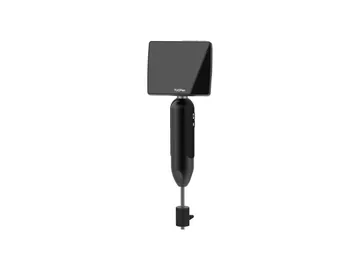
Yes, the neonatal model (M100). It has a straight shape, and the manufacturer states that this shape follows the curve of the infant mouth. The manufacturer also states that the ultra-thin extension arm optimises the intubation space. The blades come in three sizes, MIL00 for premature babies, MIL0 for newborns and MIL1 for infants, and they have a closed design.
How does the team prepare for and follow the intubation?
A new single-use blade is used for each patient, in the size the physician chooses, and the blades are anti-fog. On the five-blade device the monitor rotates in two axes, so its angle can be adjusted, and the operator and the assistant watch the same image. The catalogue does not give the detailed preparation steps.
What does biomedical engineering need to know about cleaning, battery and screen?
The blades are single-use, so they are not reprocessed, and the frame of the five-blade device is waterproof. How the handle and the monitor are cleaned is not given in the catalogue. The battery life, the screen size and resolution, and whether images can be recorded are not listed here either. Write to us with these questions.
What are GlideScope, C-MAC and McGrath?
GlideScope is the brand name Verathon uses for its video laryngoscopes, C-MAC is a brand name of KARL STORZ, and McGrath is a brand name of Medtronic. The names belong to their owners; the product on this page is not one of those brands. This page does not compare products.
Is there scientific evidence for video laryngoscopy?
For this class of device, yes. A 2022 Cochrane systematic review of 222 studies in adults (Hansel et al., Cochrane Database Syst Rev 2022;4:CD011136) found, with moderate certainty, that video laryngoscopy probably reduces failed intubation and improves the view of the glottis compared with direct laryngoscopy. Hypoxemia was probably reduced with Macintosh-style and channelled devices, and no clear difference was seen with hyperangulated devices (low certainty). Success at the first attempt may increase, with low or very low certainty. This review covers the class of device; it does not show a study done with the device on this page. The choice of device is the physician's.
Can I order the video laryngoscope in Türkiye, and what is the price?
We can share the product documents, and the five blade sizes and the three blades of the neonatal model are in the table on this page. Not yet: the video laryngoscope is not available for order in Türkiye, so this page carries no list price. Write to us with the button on this page for information.